
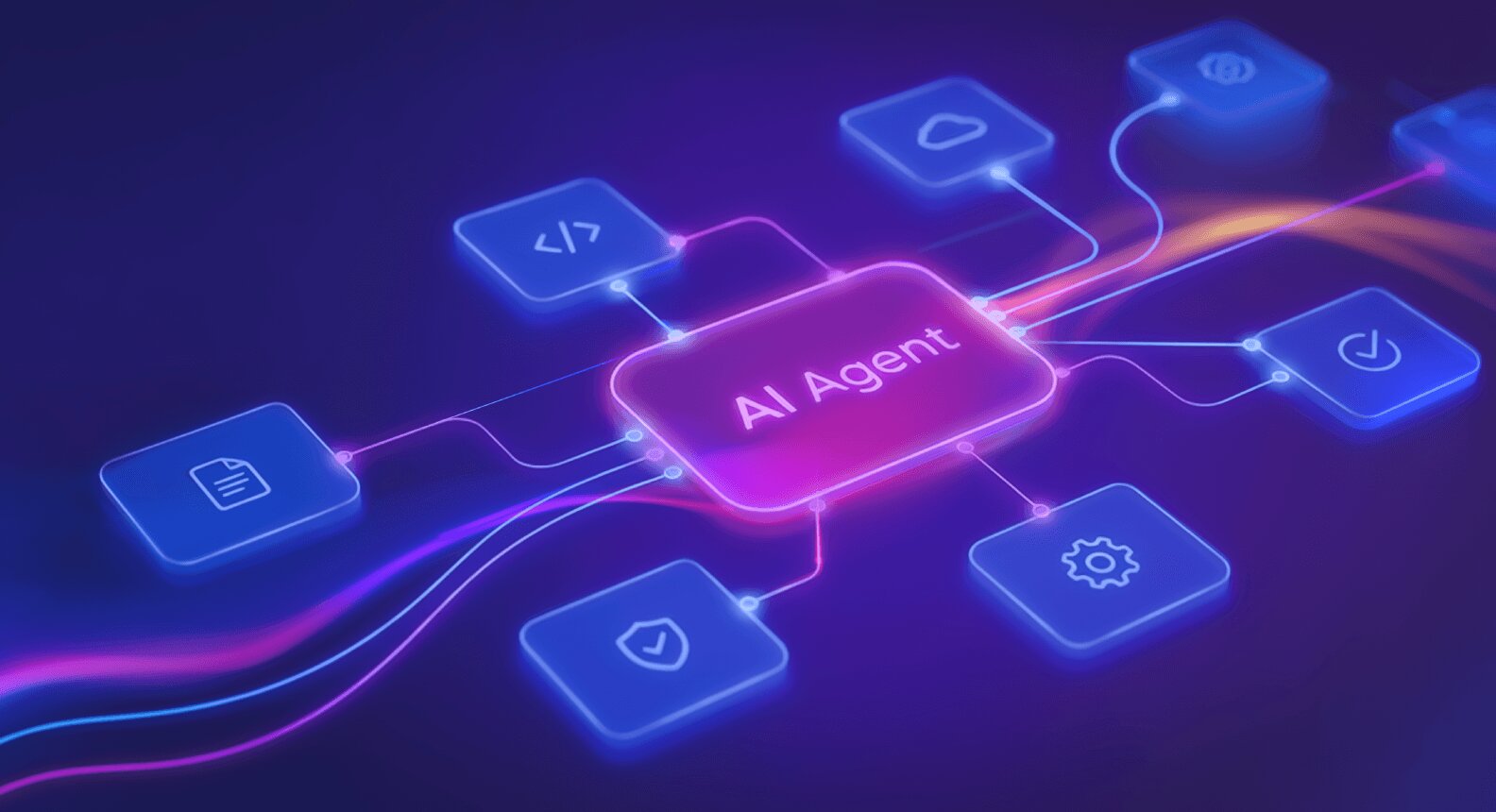
The AI Agent Trap: Why Smart Automation Still Wins
AI Transformation & Automation
The AI Agent Trap: Why Smart Automation Still Wins
Everyone is rushing towards AI agents. But for most businesses, the real opportunity is not giving AI full control. It is building smart, reliable automation systems where AI works inside a secure and controlled architecture.
The current AI problem
Many companies are entering AI through the wrong door.
There is a trap many companies are falling into as they try to adopt artificial intelligence.
Right now, everyone is queuing at the “AI Agent” door. Businesses are being sold the idea that autonomous agents will solve everything: sales, operations, customer support, admin, reporting, marketing, and decision-making.
The promise sounds powerful. The reality is more complex.
Behind the hype, many companies are running into the same problems: high and unpredictable AI costs, unreliable outputs, hallucinations, lack of operational control, security concerns, and workflows that look impressive in demos but become fragile in real business environments.
Meanwhile, the automation door is much quieter. And that is the door many companies should be looking at first.
The hidden risks
AI agents are powerful, but they are not a strategy on their own.
Giving full control to autonomous systems without the right architecture can create more risk than value.
Unpredictable cost
Autonomous AI systems can quickly increase token usage through oversized prompts, repeated calls, unnecessary context, and inefficient model selection.
Operational risk
When an AI system has too much freedom, it can produce outputs that are inconsistent, difficult to validate, or unsuitable for real business processes.
Data exposure
For companies handling sensitive information, uncontrolled AI adoption can create serious concerns around privacy, security, and compliance.
Modern automation
Automation is no longer just “if A happens, do B”.
A common misunderstanding is that automation simply means basic trigger-based logic. That version still exists, but it is no longer the full picture.
Modern automation can include AI-assisted decision-making, custom workflow logic, human approval steps, CRM and database integrations, document generation, reporting automation, RAG systems connected to company knowledge, local or private AI models, and controlled AI agents with highly specific responsibilities.
In other words, automation today can use AI agents too.
The difference is control. Instead of giving an AI system unlimited freedom, we place AI inside a structured workflow where every step has a purpose, every action is controlled, and every output can be reviewed, validated, or routed properly.
AI agents vs smart automation
The real question is not whether to use AI. It is how to control it.
| Area | Autonomous AI agent first | Smart automation first |
|---|---|---|
| Control | Broad autonomy with higher risk | Defined rules, permissions, and boundaries |
| Cost | Often unpredictable token usage | Optimised AI calls and predictable spend |
| Reliability | Can vary depending on prompt, context, and model behaviour | Structured workflow logic with validation points |
| Integration | Harder to connect safely across business systems | Designed around APIs, CRMs, databases, and internal tools |
| Privacy | Can expose sensitive data if poorly designed | Can support private, local, or hybrid AI architecture |
| Best use | Exploration, research, flexible reasoning, creative tasks | Operational workflows, business processes, repeatable ROI |
Where the value appears
The real advantage is control, cost efficiency, and reliability.
When AI is integrated into a well-designed automation architecture, companies can decide exactly when AI is needed, what context it receives, what tools it can access, and what actions it is allowed to take.
Token spend control
Smart workflow logic avoids unnecessary AI calls, reduces oversized prompts, and uses the right model only when it adds real value.
Predictable operations
Every step can be logged, monitored, validated, and improved, making AI adoption suitable for real daily business use.
Local AI viability
Efficient architecture makes it possible to use local or private AI models in environments where privacy and security are non-negotiable.
Cloud, local, or hybrid
AI should work inside the architecture your business actually needs.
For many companies, sending sensitive data to external AI platforms is not acceptable. Legal firms, healthcare providers, finance teams, real estate companies, internal operations departments, and companies handling confidential client data need a more controlled approach.
With the right architecture, AI-assisted workflows can run using cloud-based models, local/private AI models, or a hybrid structure depending on the task, sensitivity, cost, and performance requirements.
This creates a safer and more realistic path for AI adoption. The business gets the benefit of AI without losing control over its data, infrastructure, costs, or operational reliability.
The right mindset
The future is not AI agents vs automation.
The future is about combining them properly.
Language models are incredibly powerful, but the real value appears when they are integrated into secure, structured, and reliable business systems.
AI should not sit outside the company, making unpredictable decisions in isolation. It should be embedded into workflows, connected to the right data, limited by the right rules, and designed around measurable business outcomes.
That is where AI becomes useful. That is where automation becomes intelligent. And that is where companies start seeing real ROI.
AI adoption questions
Questions companies should ask before adopting AI.
What process are we actually improving?
AI should be connected to a clear operational goal. Without a defined process, companies often end up adding complexity instead of improving performance.
Where does AI genuinely add value?
Not every step needs a language model. Smart systems combine traditional logic, automation, AI reasoning, data retrieval, and human review where each one makes sense.
How do we control cost?
Token spend should be designed, monitored, and optimised from the beginning. Efficient workflow logic can significantly reduce unnecessary AI usage.
How do we protect sensitive data?
Depending on the environment, the right setup may involve cloud AI, local AI models, private infrastructure, restricted context, or hybrid architecture.
How do we make the system reliable enough for daily operations?
Reliability comes from structure: defined workflows, validation steps, logging, permissions, fallback logic, and clear human oversight when needed.
AI integration consulting
Do not get stuck in the hype queue throwing money away.
At Alt Saint, we help businesses design and implement AI-powered workflows, automation systems, RAG assistants, and local/private AI solutions built for real operational use.
No hype. No unnecessary complexity. Just controlled, scalable AI systems designed around your business.