
E-commerce
E-commerce
Build an online store people trust, buy from and come back to.
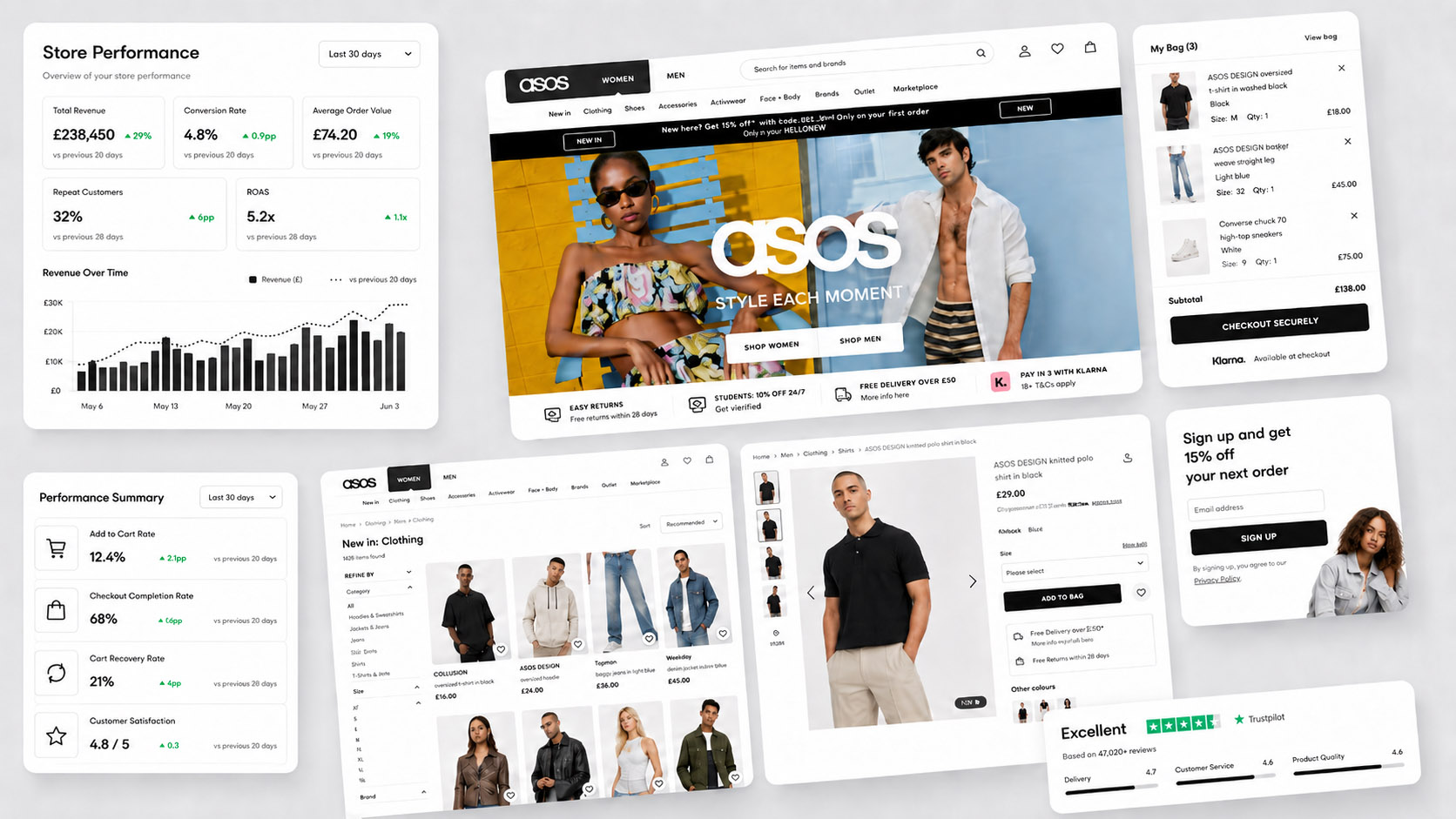
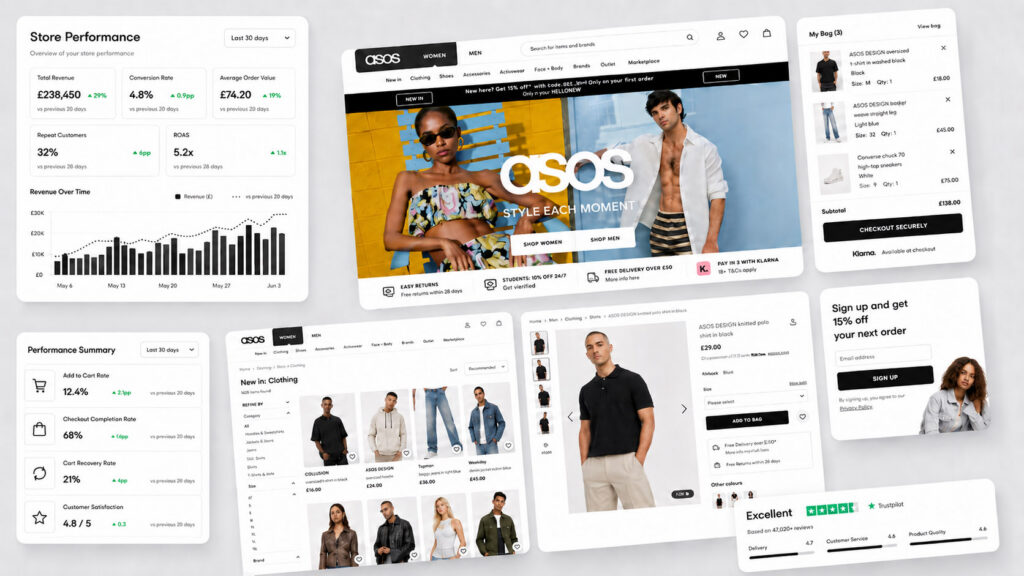
ALT SAINT builds and improves e-commerce experiences around the product, the buying journey and the operations behind the store. We help structure product pages, catalogues, checkout, payments, shipping, analytics, email capture and platform workflows across WooCommerce, Shopify and other commerce setups.
The Starting Point
Products are only one part of the sale.
An online store needs more than products on a page. Customers need to find the right item, understand the offer, trust the product, choose delivery, complete checkout and feel confident about what happens next.
E-commerce is for businesses that need a clearer store journey and a more manageable back end: product pages, catalogue structure, checkout, payment, shipping, analytics and workflows shaped around how the business actually sells.
What We Build
Commerce systems for product journeys, checkout and store operations.
We build and improve the parts of the store that shape how people browse, decide, buy and what your team needs to manage after the sale.
Store Builds
New WooCommerce, Shopify or platform-based stores structured around products, customers and operations.
Product Pages
Product pages that make the offer clearer through imagery, descriptions, specifications, proof, delivery details and CTAs.
Catalogue & Navigation
Category, filter and product structures that help customers find the right product faster.
Checkout, Payments & Shipping
Checkout paths, payment options and shipping logic configured around customer expectations and business rules.
Email, CRM & Automation Handoff
Email capture, abandoned cart, customer segmentation and CRM or automation handoff where the platform supports it.
Analytics & Store Optimisation
Tracking, reporting and improvement guidance so the store can be reviewed and refined after launch.
Platform Direction
The right platform depends on the product, catalogue and team.
We help choose, build or improve the platform around your catalogue, customer journey, team and operational needs.
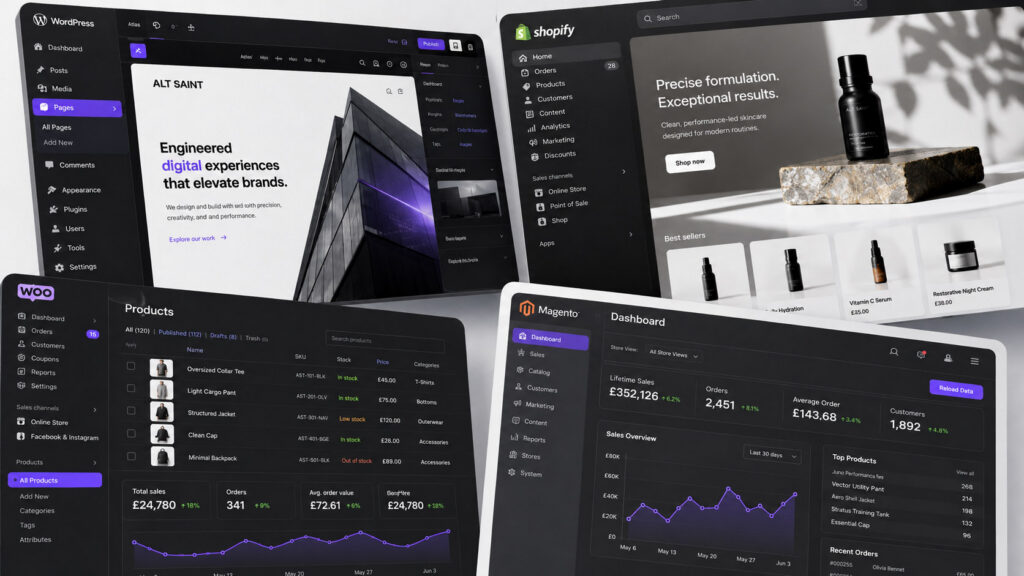
WooCommerce, Shopify, Magento / Adobe Commerce or hybrid setups can all be valid depending on the catalogue, content needs, internal team, checkout complexity and operational model. The platform should support how the business sells, not force the business into the wrong structure.
Where Stores Lose Buyers
Buyers usually leave before they tell you why.
The issue is rarely one broken button. It is usually a chain of small frictions: unclear product information, weak navigation, missing proof, poor mobile flow or disconnected store operations.
Unclear Product Information
Customers hesitate when details, imagery, sizing, specifications, delivery or returns are hard to understand.
Weak Category Structure
Poor categories, filters and search make the right product harder to find.
Checkout Friction
Unexpected steps, unclear payment options or confusing shipping rules can stop customers at the final stage.
Trust Appears Too Late
Reviews, guarantees, delivery clarity, FAQs and proof need to support the decision before the customer leaves.
Disconnected Operations
Stores become harder to manage when email, CRM, fulfilment, analytics or reporting are not connected properly.
Poor Mobile Flow
Mobile customers need fast product discovery, clear CTAs and a checkout path that feels simple.
What You Get
A clearer store experience from product discovery to post-purchase.
Depending on scope, your project can include platform direction, product page structure, catalogue planning, checkout improvements, payment and shipping configuration, analytics, email capture, CRM handoff and store workflow support.
The goal is to create a store that is easier for customers to browse, trust and buy from, while giving your team a clearer system to manage products, orders, marketing and future improvements.
How It Works
From commerce audit to launch-ready store.
A practical process for turning products, platform choices and operational needs into a clearer e-commerce system.
01
Commerce Audit & Goals
We review the store, products, audience, current platform, constraints and commercial goals.
02
Platform & Catalogue Planning
We define the right platform direction, product categories, attributes, filters and content needs.
03
Product Journey Structure
We plan product pages, category pages, trust signals, CTAs, mobile journey and checkout flow.
04
Store Build or Improvement
We build the store or improve key sections, templates, pages and store settings.
05
Payments, Shipping & Integrations
We configure payment, shipping, email, CRM, analytics or automation handoff where required.
06
Launch Review & Optimisation Guidance
We review mobile, tracking, checkout, product data and next improvement opportunities.
Why This Works Better
More strategic than a basic store setup. More practical than platform advice alone.
| Area | ALT SAINT approach | Common alternative | Why it matters |
|---|---|---|---|
| Platform choice | We choose or improve the platform around catalogue, team and operations. | Picking a platform because it is popular. | Platform fit affects long-term management. |
| Product presentation | We structure product pages around clarity, proof and buying confidence. | Uploading products into a default template. | Better information reduces hesitation. |
| Buying journey | We consider navigation, filters, product flow and mobile use. | Focusing only on homepage design. | Customers need to find and compare quickly. |
| Checkout and payment | We plan checkout, payment and shipping around customer expectations. | Leaving checkout settings as an afterthought. | Friction often appears at the final step. |
| Operations and integrations | We consider email, CRM, fulfilment, analytics and handoff. | Store isolated from business systems. | Commerce only works when the back end can keep up. |
| Optimisation | We create a review path after launch. | Launch-and-leave store delivery. | Stores need ongoing improvement as data arrives. |
Explore Alt Saint with AI
Ask Alt Saint AI
Related Services
E-commerce Related Services
Explore related services to discover more solutions, capabilities and ways we can help.

Start With the Store
Ready to make your store easier to buy from and manage?
Tell us what you sell, what platform you use and where the store is creating friction. We will help you decide whether the next move is a new store, a focused improvement, product page work, checkout support or commerce integrations.
Start the Commerce Conversation
Tell us what your store needs to do.
Share your current store URL, platform, product range and whether this is a new build or an existing store improvement.
Useful details include number of products, product categories, main issue, checkout, payment and shipping needs, integrations, analytics and timeline.
Questions
What clients usually ask before an e-commerce project.
What e-commerce platforms do you work with?
We can work across WooCommerce, Shopify, Magento / Adobe Commerce, Squarespace Commerce, Wix eCommerce and custom or hybrid setups where relevant.
Can you build a WooCommerce store?
Yes. WooCommerce is a strong option when a business wants commerce inside a WordPress-led website with flexible content ownership.
Can you work with Shopify?
Yes. We can support Shopify store setup, theme structure, product pages, app configuration and store improvements.
Can you improve an existing store?
Yes. We can review and improve product pages, navigation, checkout flow, mobile usability, tracking and operational handoff.
Can you improve product pages?
Yes. We can improve product structure, imagery direction, descriptions, specifications, trust signals, FAQs and CTA placement.
Can you help with checkout, payments and shipping?
Yes. We can support checkout structure, payment setup and shipping logic depending on the platform and business rules involved.
Can you connect email, CRM or automation?
Yes. We can connect store activity to email capture, abandoned cart flows, CRM routing or automation workflows where supported.
What do you need to start?
We usually need the store URL, platform, product count, main issues, target customers, payment and shipping needs, integrations and timeline.